–
BY ALISTAIR MCLAUCHLAN
Dissertation submitted as part of the final examination for the degree of MLitt Highlands and Islands Literature University of the Highlands and Islands
31st July 2024
–
PART ONE: THE EARLY REPUTATION OF THE FLANNAN ISLES
PART TWO: ‘THE DISASTER’ AND NEWSPAPER COVERAGE
PART 3: THE LITERATURE
3.1 The Flannan Isles by Wilfrid William Gibson
3.2 FOLKLORE AND PULP MAGAZINES
3.3 EXTRATERRESTRIAL AND INTERDIMENSIONAL
3.4 MODERN INTERPRETATIONS: MADNESS AND THE TEMPLE OF BLESSING
4: WAVES AND CONCLUSION
BIBLIOGRAPHY
–
ABSTRACT
A detailed analysis of all the literature related to the Flannan Isles/Seven Hunters from 1500 to the present day. This includes early accounts by travellers to the Hebrides, local folklore and historical accounts, the initial press coverage and all the related poetry, short stories, novels, plays, operas, and films that were inspired by the 1900 Disappearance of the Three Lighthouse keepers on Eilean Mor, Lewis. Often described as the Scottish Marie Celeste, the Eilean Mor mystery shares many maritime and supernatural characteristics with its predecessor in that many of the believed facts were created by non-fiction and fiction authors. These literary creations and myths and a utilisation the Islands history have served to inspire later authors and creatives and preserve and perpetuate the idea of a Scottish Highland and Islands mystery.
METHODOLOGY
As an avid reader of Scottish folklore and supernatural tales I was already aware of the Flannan Isles Mystery however my knowledge of the mystery was confined to paranormal story collections and television documentaries and podcasts. After deciding on this topic of this dissertation I felt it vital to get as close to the Islands as possible, so I travelled to Lewis in September 2023 and was able to visit the small museum on Breasclete, Lewis. By kind permission I was afforded a full afternoon studying their literature and exhibition and was able to chat to the locals about the disaster/mystery and the Islands. Unfortunately, I could not visit Eilean Mor as it was too dangerous to moor a boat, however I did manage to view the Islands and Lighthouse from a telescope on Gallen Point, Lewis.
By appointment I visited to the National Library to study: original Stevenson schematics and Lighthouse construction information: several related novels only viewable in house and watch a BBC documentary from the 1950’s that was useful in giving me a sense of the terrain of the Island, the lighthouse, and the tumultuous seas. I then collected many novels, plays, short story collections, articles and movies relating to the Flannan Isles. I had the straightforward process of identifying the literature by searching key terms in the UHI online library, National Library of Scotland, and various other online databases, borrowing if available or buying the texts online. To study the early 20th century newspaper coverage, I subscribed to British National Newspaper Archive. I also exchanged many emails with Hebridean and Highland folklorists, historians, and writers, all of whom were extremely helpful. Keith McCloskey and Angela Elliot were particularly helpful and gracefully answered all the questions I asked with detailed and valuable answers.
The main contemporary literature that discusses the mystery are the book ‘The Lighthouse: The Mystery of the Eilean Mor Lighthouse Keepers’ by Keith McCloskey (McCloskey 2014) and essay ‘The Vanishing Lighthousemen of Eilean Mor by Mike Dash (Dash 1997). Both works are a detailed study of the Eilean Mor, the mystery and surrounding literature. As excellent as these works are I wanted to research all the literature that contributed and were inspired by the Flannan Isles and the mystery rather than solely an explanation of the mystery itself. It quickly became apparent that I needed to source a copy of the ‘The Tragedy of the Seven Hunters by Ernest Fallon (Fallon 1929). I tried to find a copy of ‘True Strange Stories’ from many US Pulp Magazine enthusiasts through email and social media but was unsuccessful. I finally managed to attain a microfilm copy of the magazine at the American Library of Congress (Elizabeth McHugh the Electronic Resources Manager at UHI Inverness was extremely helpful and completed this complicated process). This was vital as it identified the Source of the Phantom of the Seven Hunters myth and the often-referenced logbook.
There were many dead ends as many Flannan Isles related novels and articles were either little related to the mystery, written far from the Hebrides or simply regurgitated the bare and often erroneous facts of the tale. As a general observation the further I got from the Flannan Isles and Eilean Mor the further away I read about the generally accepted facts of the 25th of December 1900 and the more the literature described an apparent mystery.
My review of the literature had to be chronological as the most important texts are influenced by their predecessors and there is a definite chain of causation. Also, over the last century within my studies I have identified five definite themes or literal approaches: the Poem: folklore largely contained in and related to Pulp Magazines: the eclectic and extraterrestrial approaches: Madness or the psychological treatments of modern interpretations and finally the sea or waves.
It was not my intention to solve the Flannan Isles mystery but to research and analyse all the literature related to the Flannan Isles and Eilean Mor and examine why the mystery has become such an enduring and fascinating tale. We shall never know what happened to Ducat, Marshall and MacArthur as their bodies were never found however, in the process of examining all the poems, articles, stories and entertainment inspired by the Flannan Isles, in my opinion, the solution finally emerged from the Hebridean mist.
INTRODUCTION
Though three men dwell on Flannan Isle
To keep the lamp alight,
As we steered under the lee, we caught
No glimmer through the night.
Aye: though we hunted high and low,
And hunted everywhere,
Of the three men’s fate we found no trace,
Of any kind in any place,
But a door ajar, and an untouched meal,
And an overtoppled chair
(Gibson 1912).
So begins Wilfrid Gibsons poem ‘The Flannan Isles’ a piece of literature that became synonymous with the Flannan Isles mystery. A poem that became so popular that it is details often replaced the recorded facts of the maritime disaster of 26th of December 1900. Upon asking few may be able to identify the ‘the Flannan Isles Mystery’ but when reminded of the strange details, many will be able to recall the bare bones of the classic tale. A tale of the three lighthouse keepers left on a barren Hebridean island that disappeared overnight leaving only their meals on the table, a chair toppled over and a strange logbook. For some writers, the keepers were haunted by the marauding spirit of Saint Flannan or the Phantom of the Seven Hunters, some believed malevolent fairies or evil Pygmies were so offended by the keepers appearance that they chased them into the sea. Others considered a keeper went mad and threw his compatriots over the cliffs, while some that they were kidnapped or taken by sea beasts or even aliens. Through extensive research and study of the related literature I will show that this mystery had its beginnings in the journals of early travellers to the Hebrides then evolved in initial mischievous journalists reports and the creativity of an imaginative Georgian poet through to American Pulp fiction writers, Scottish authors, and folklorists. How these details have inspired modern day interpretations on the stage and screen and influenced modern Science Fiction and Crime detective authors.
PART ONE: THE EARLY REPUTATION OF THE FLANNAN ISLES
Early accounts of the Flannan Isles contributed to the Flannan Isles reputation as mysterious long before the disappearances of the three keepers. The first documenters of the Highlands and Hebrides deliberately included the more strange and eccentric traditions of the populace but this in turn would contribute to a negative stereotype of the Highlander as backward and overly superstitious. As Martin Rackwitz succinctly describes in his dissertation Travels to terra incognita: The Scottish Highlands and Hebrides in early modern travellers’ accounts c. 1600 to 1800:
The overall image of the Highlanders in the seventeenth- and early eighteenth-century geographies was that of an ignorant and uncivilised people. Contemporary geographies and histories showed a huge lack of factual knowledge and understanding of Highland life and culture, and, therefore, provided stereotyped and prejudiced images of an area that in their view had yet to be civilised. The catalogue of miracles and natural curiosities usually associated with Scotland did little to correct the country’s uncivilised image (Rackwitz 2004:61).
Despite this negative reputation there was a deep curiosity of Scottish Highlands in the lowlands of Scotland, England, and wider Europe. The Flannan Isles belonged to the Parish of Uig on the west coast of Lewis in the Western Isles or Outer Hebrides of Scotland. Although much of Scotland was steeped in superstition and mysterious tales, the Isle of Lewis (Lewis is half an Island shared with Harris to the south) was particularly abundant. These tales endured mainly through word of mouth in Gaelic tradition. Within Uig also lay the famous Callanish Stones, a collection of Neolithic stones which were arranged into a crossed formation. They were used for Druidic worship and part of a far larger collection dotted around the Island. According to one tradition, the Callanish Stones were petrified giants who would not convert to Christianity. At the far north or ‘Butt of Lewis’ there was the famed Isle of Pygmies or Luchruban (MacGregor 1925:184). Early accounts of these Pygmies were later discounted when the skeletons were proved to be the bones of fowling or birds. The Blue Men of the Minch or storm Kelpies were said to populate the of sea between the east side of Lewis and mainland Scotland and were bothersome mermen who harassed fisherman by posing riddles then tipping boats if suitable answers were not provided. Folklore also describes many local interactions with other supernatural figures such as water spirits, witches, werewolves, and sea monsters. The Flannan Isles are rarely mentioned in these tales apart from passing mentions about voyages to collect sheep or the harvest of birds, feathers, and eggs. However, in general the Flannan Isles were viewed with a degree of respect if not fear and were regarded by locals as sacred. Shipwrecked sailors were sometimes washed upon the Isles craggy shores but able to survive on the natural bounty while troublesome locals were said to be banished to the Isles as punishment for misdeeds
| THE FLANNAN ISLES |
Figure i. Map of Scotland (National Geographic 2024).
The Flannan Isles, also known as the Seven Sisters or North Hunters, are a group of seven small islands which lie around 20 miles west of the Isle of Lewis, to the east and beyond lies only the great expanse of the Atlantic Ocean. The islands are split into three groups. There is Eilean Mòr (Big Isle), the largest of the group at 43 acres where the lighthouse was built and Eilean Taighe (House Isle). To the south lies Soray Soraigh, (South Island) and Sgeir Tomain (skerry) and to the west the far smaller islets or outcrops: Eilean a’ Ghobha (Isle of the Blacksmith), Roaireim and Bròna Cleit (Robson n.d.). Upon Eilean Mor exists the Teampull Beannachadh meaning the House or Temple of Blessing (MacGregor, 1925: 15) or St Flann’s Chapel which is a small drystone building. It is said to have housed monks in the 7th Century and St Flann may refer to the Irish Saint Flannan MacToirrdelbaig a Bishop of Killaloe, County Clare, Ireland who was said to have preached in the Hebrides (Robson, n.d.). Certainly, this would tie in with the Columban practice or Hermetic ideal called Peregrinatio pro Christo – the seeking of a place of retreat on the Ocean (Bateman 2009:149). Others however believe the nomenclature is derived from the Welsh Gaelic or ‘Cymric gwlanen, flannel gwlan, wool’ (Robson, n.d:1) and an early reference to the larger Islands reputation for sheep grazing. Strangely however the name Flannan has only ever referred to the Island group rather than one singular Island.
The oldest known written account of the Hebrides and the Flannan Isles was made by Sir Donald Monro or ‘Dean of the Isles’ within his ‘’Description of the Western Isles of Scotland’ published in 1549. Within this he named the Flannan Isles as the ‘Seven Haley (Holy) Isles’ (Munro 1884:57).
First, forth, fifty miles in western seas from the coast of the parish Vye (Uig) in Lewis, towards the West, Northwest, lies the seven isles of St. Flannan, cladded with firth, and Holy Isles, very natural grazing within these isles, very wild sheep therein, which no man knows to whom the sheep belong … The said isles are neither cultivated nor inhabited, but full of grey high hills, full of wild sheep in the seven isles, which may not be outrun. They belong to MacLeod of Lewis (Mardon n.d:45).
Munro included many short descriptions of other Hebridean Islands in his collection including ‘Hirta’ or St Kilda (Mardon n.d:154) to the southwest of the Flannan Isles and the ‘Eilean nan Luchruban’ or ‘The Pigmies Ile’ (Munro 1884: 51) which would be regularly confused with Eilean Mor by future travellers and writers. Monro was criticised for his inclusion of much folklore in his descriptions of the Hebrides, but his initial description was important as it showed an early description of the Isles and their reputation for being holy.
Martin Martin, or in his native Gaelic, Màrtainn MacGilleMhàrtainn conducted a tour of the western Islands and Hebrides of Scotland in 1695 which was later published as ‘A Description of the Western Islands of Scotland’ (Martin, 1999) in 1703. Eventually Martin reached Lewis and recorded the locals opinions of the Flannan Isles or the North Hunters as they were locally referred to. His introduction to the Islands is similar Munro’s brief description 150 years earlier:
To the north-west of Galen-head, and within six leagues of it, lie the Flannan-Islands, which the seamen call North-hunters; they are but small islands, and six in number, and maintain about seventy sheep yearly. The inhabitants of the adjacent lands of the Lewis, having a right to these islands, visit them once every summer, and there make a great purchase of fowls (birds) eggs, down, feathers, and quills. (Martin 2018:24)
However, Martin then detailed the apparent strange behaviour that the locals adhered to on their visits to the Flannans:
When they go to sea, they have their boat well manned, and make towards the islands with an east wind; but if before or at landing the wind turn westerly, they hoist up sail, and steer directly home again. If any of their crew is a novice, and not versed in the customs of the place, he must be instructed perfectly in all the punctilios observed here before landing…when they are got up into the island, all of them uncover their heads, and make a turn sun-ways round, thanking God for their safety. The first injunction given after landing, is not to ease nature in that place where the boat lies, for that they reckon a crime of the highest nature, and of dangerous consequence to all their crew; for they have a great regard to that very piece of rock upon which they first set their feet, after escaping the danger of the ocean. (Martin 2018:24)
The dislike of the westerly or anti-clockwise behaviour of the wind on the voyage to the Island and initial landing describes the common Highland tradition named ‘deiseal’ which means ‘right hand turn’ (Gregorson Campbell, 2019: 229). It originated as a pagan or druidic custom used to draw power from the sun and was regularly recorded as an everyday tradition by later travellers of the Highlands. Often practiced as a method to bring good fortune or health, it was also practised as a funeral rite and deemed one the most important of all Highland traditions. While Martin Martin deliberately included these ‘punctilios’ to appease the curiosity of his intended audience they were often misinterpreted later as being strange or in deference to the supernatural however this behaviour was neither specific to the Flannan Isles nor particularly strange in a Highland cultural context. In reference to Eilean Mor itself he describes:
The biggest of these islands is called Island-More; it has the ruins of a chapel dedicated to St. Flannan, from whom the island derives its name. When they are come within about 20 paces of the altar, they all strip themselves of their upper garments at once; and their upper clothes being laid upon a stone, which stands there on purpose for that use, all the crew pray three times before they begin fowling: the first day they say the first prayer, advancing towards the chapel upon their knees; the second prayer is said as they go round the chapel; the third is said hard by or at the chapel; and this is their morning-service (Martin 2018:24).
These strong acts of devotion to their Lord in a famously devout part of Scotland in the 17th century are not startling, similarly the triple prayer ritual is also part of the deiseal tradition. The removal of garments in an act of respect at a place of worship or supposed sanctity were commonplace, admittedly not normally to their bare chests. Although this act of praise would appear to be overly strong to outsiders especially two hundred years later, in the early 18th Century the Catholic faith was still particularly strong in the far western Gaelic speaking communities. Martin then describes the strange language the island visitors used:
It is absolutely unlawful to call the island of St. Kilda (which lies thirty leagues southward) by its proper Irish name Hirt, but only the high country. They must not so much as once name the islands in which they are following by the ordinary name Flannan, but only The Country. There are several other things that must not be called by their common names, e.g., Visk, which in the language of the natives signifies Water, they call Burn; a Rock, which in their language is Creg, must here be called Cruey, i.e., hard; Shore in their language, expressed by Claddach, must here be called Vah, i.e., a Cave (Martin 2018:25).
The specific lexicon or synonyms used by the visitors was not specific to the Flannans. As John Gregerson Campell later noted in his ‘Superstitions of the Highlands and Islands of Scotland’ this is called: ‘BOAT LANGUAGE: When in a boat at sea, sailing or fishing, it was forbidden to call things by the names by which they are named on land. The stone for anchoring a boat was not clach but cruiadh’ (hardness) (Gregorson Campbell 2019: 239). Similarly, the usage of ‘Burn,’ to mean water was commonplace and is still used in modern day Scots English to mean a small stream. ‘Vah’ refers to ‘The Gaelic word uamh or uaimh (pronounced oo-av) means ‘a cave.’ (Grant n.d.). Martin further reinforced the sacred reputation of the Flannan Isles to the locals with:
I had this superstitious account not only from several of the natives of the Lewis, but likewise from who had been in the Flannan islands the preceding year. I asked one of them if he prayed at home as often, and as fervently as he did when in the Flannan Islands, and he plainly confessed to me that he did not: adding further, that these remote islands were places of inherent sanctity; and that there was none ever yet landed in them but found himself more disposed to devotion there, than anywhere else. (Martin, 2018:25)
The foreboding setting of a secluded Island 20 miles off the coast of Scotland would engender fear and apprehension even in heathens so it is unsurprising that the devout would take solace in their faith. Added to this you would have a long and precarious voyage back to the mainland. At the tail end of his account of Eilean Mor again there was a mention of the Pygmies: ‘The Island of Pigmies, or, as the natives call it, the Island of Little Men, is but of small extent. There has been many small bones dug out of the ground here, resembling those of human kind more than any other. This gave ground to a tradition which the natives have of a very low-statured people living once here, called lusbirdan, i.e., pygmies’ (Martin, 2018:26). Martin forgot to sufficiently separate the Flannan Isles from the Island at the Butt of Lewis in his prose, which would lead to later confusion.
The traditions would be later misinterpreted as strange rather than simply eccentric and are more related with the devout belief systems and superstitions of the visiting fisherman rather than relating to the Island. Fisherman in many cultures were notoriously superstitious and would often demand the prohibition or certain terms and language lest they attract ill fortune or punishment from the deep. The authors deliberate concentration on the strange and superstitious aspects of the Western Isles brought much opprobrium especially later in the Enlightened age of science and reason. In general Martin Martin’s contemporaries were scathing in reaction, with the London literati ridiculing his apparent fascination with similar supernatural traditions such as the Highland gift of the Second Sight, disregarding his efforts as mere curiosity.
When asked the famous writer Dr Samuel Johnson remarked: ‘No man,’ he said, ‘now writes so ill as Martin’s account of the Hebrides is written’ (Johnson 1775). Despite these qualifications Martin’s firsthand accounts gathered from the locals are important as the first detailed description of not only the Western Hebrides and the Flannan Isles but also because his descriptions are consistently referred to by later journalists and writers when trying to pose a supernatural answer to the lighthouse keeper’s disappearance 200 years later and as a possible ghostly or cursed resolution to the mystery. Similarly, these strange accounts serve as inspiration to many later works of fiction and neatly fill the prerequisites tropes of gothic fiction such as solitary monks, the supernatural, ancient traditions, and a far-off secluded setting.
The first piece of fiction inspired by the Flannan Isles and Eilean Mor was the poem ‘A Celtic Paradise’ by Dr John Leyden (Leyden 1875:130), which was published together with an anthology of poems and accompanying travelogue after Leyden’s tour of Highlands in 1800 (Leyden 1875). A friend and literary collaborator of fellow lowlander Sir Walter Scott, Leyden was recognised as a representative of the Scottish Romantic movement and his poem was influenced by James McPherson’s Ossian cycle of epic poems (McPherson,1760) which in turn greatly influenced the growing Romantic movement at the turn of the 1800s. Whereas Dr Samuel Johnson seemed determined to disprove the legitimacy of James McPherson’s controversial collection ‘The Poems of Ossian’ (McPherson 1760) during his famous tour (Johnson 1775) Leyden deliberately sought out evidence to prove the authenticity of the Ossian collection during his Highland travels. The poem included many characteristics of Romantic era poetry being deeply imaginative, concerned with nature and the sublime. Romantic era poets were also similarly attracted to exotic, remote and obscure places such as the Flannan Isles. The poem begins:
On Flannan’s rock, where spring perennial smiles,
Beyond the verge of cold Ebuda’s isles-
Were, as the labourer turns the sainted ground,
The relics of a pygmy race are found;
A race who lived before the light of song
Had poured its beams o,er days forgotten long, –
A Druid dwelt – at whose enclosing gate
The spirits of the winds were wont to wait (Leyden 1875:131).
The poem describes a heroic boat voyage to the ‘Sainted isle (Leyden 1875:131).and of a Druid or Seers initial visitation to the uninhabited paradise. Again, there is the erroneous mentions of the Pygmies as in Martin and Munro’s descriptions. The boat if buffeted by huge waves: ‘Whose heaving wastes and weltering waves enclose/ The Western Isle, where ancient chiefs repose’ (Leyden,1875:131). The final verse describes:
The milk-white sails bend forward to the breeze:
No human forms the glistening cordage bound,
But shapes like moon-light shadows glancing round.
Unusual terror seized the aged seer.
And soon these whispered accents reached his ear:
“The boat of heroes see, -no longer stay-
Come to the fair Green Isle of those long passed away! (Leyden1875:131).
Leyden’s poem was influenced by Martin’s description a century before. There was no mention of the Flannan Isles or Lewis in his travelogue and accompanying memoir (Leyden. 1875, ix) so one may surmise he was depending upon the Martin’s description rather than any personal visitation. The topographical descriptions of island were described as far grander in scale with mountains and ‘green sloping hills’ (Leyden1875:131) that were far larger than the 40-acre island populated by only solitary monks and sheep. While Druids and Seers were included by the poet, monks and the religious characteristics of the islands are slighted. The emphasis is upon nature reflecting romantic era poets belief that nature is the dwelling place of God, and a metaphor for the sublime. ‘Unusual terror seized the aged seer’ (Leyden1875:131) as he approached the Isles reflecting Martin’s description of the locals apprehension and fear on visiting Eilean Mor. The poem again reflected the early reputation of the Flannan Isles and Eilean Mor as otherworldly, ethereal and beyond the realms of contemporary perception. This poem seemed to have disappeared from recognition never being referred to in later accounts of the Flannan Isles, this was because of the fading popularity of romantic poetry and the increased dubiety of the Ossian collection in the following century. However, accompanying Ossianic poems such as The Mermaid and The Elfin King (Leyden,1875: 96-111) in Leyden’s collection garnered more praise and popularity.
It is important to detail the specific literary environment of Scotland by the turn of the 19th to 20th century or fin de cycle. The Highlands had changed dramatically since the 1700s. The failed Jacobite rebellion and defeat at Culloden, the dissolution of the Highland clan system, the Highland Clearances and industrialisation all contributed to a decline in the Highland way of life. This in turn contributed to a negative stereotype of the Highlander or the wider Celt as a defeated and colonised people in literature, a stereotype that pervaded well into the 18th century. The most influential text on the broader genre of Celtic literature in the 1800’s was Matthew Arnold’s essay, ‘On the Study of Celtic Literature’ (Arnold, 1976) which promoted these negative stereotypes. As Marion Gibson describes: ‘to Arnold ‘the ‘Celts’ were idealised as being magical, imaginative and egalitarian, but were also accepted to be superstitious, excitable and subversive …Celts were thus often represented even by their partisans as typical Victorian subject people: childlike, effeminised by unreasoning spirituality and doomed to nostalgic impotence’ (Gibson 2013:7). In response to this imposed stereotype within Scotland, Patrick Geddes penned an essay within The Evergreen in 1895 called ‘The Scots Renascence’ (Geddes 1992). Geddes’ essay was a rallying call to Scotland, a plea to resurrect the best elements of Celtic mythology in the arts and wider culture. Patrick Geddes called the movement “our Scottish, our Celtic Renascence” (Geddes 1992:23) and contributed to a popularity in the wider Celtic and Scottish Celtic literature and cultural named the Celtic Revival at the Fin De Cycle (end of century). It was into this literary environment that events of the Boxing Day 1900 on the Eilean Mor occurred, and a mystery gradually began to evolve.
PART TWO: ‘THE DISASTER’ AND NEWSPAPER COVERAGE
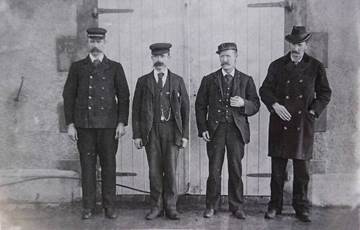
Figure ii. Picture of Thomas Marshall, Donald McArthur, James Ducat, and Lieutenant Muirhead (Press and Journal, 2020).
During the 1800s the Highlands and Islands of Scotland was subject to a great amount of change. Increased Maritime trade and resulting shipping accidents necessitated the erection of Lighthouses to safely manoeuvre shipping through the many Western islands and down the coast to the main ports of Scotland. It was decided that a Lighthouse should be erected on Eilean Mor after concern was intimated to the Northern Lighthouse Board (NLB) by passing ship captains and owners. However, construction did not begin until 1896 under the design and supervision of David A, Stevenson part of the famous Stevenson family of Lighthouse engineers and cousin of the writer Robert Louis Stevenson (Bathurst 1999:247). The Lighthouse consisted of a twenty-three metres (75 ft) cylindrical tower with balcony and lantern attached to the keeper’s lodging below. A long, steep stairway up the craggy, rock face also had to be erected together with a small railway system so to cross the island and deliver supplies. Due to the dreadful weather and the difficulty in landing building materials construction was completed four years later rather than the usual two and the 140,000 candle-power lamp was first lit on 4 December 1899 (McCloskey 2014). The Lighthouse on Eilean Mor was manned by three men on a rotating shift, with one man being relieved after two weeks. When not on shift at the Lighthouse the men lived in a specially built Lighthouse station in Breasclete, Lewis which also housed the Lighthouse men’s families. The Principal Keeper was James Ducat, 43, an experienced employee who had spent the previous 14 months on the Island during the Lighthouse construction. The second assistant keeper was Thomas Marshall, 28 and a third Occasional keeper Donald McArthur, 40, was a local of Breasclete and an Army veteran. The Northern Lighthouse Board had a relief vessel named the Hesperus that delivered men and supplies to all its stations and Lighthouses in the area. After receiving troubling reports that the Lighthouse light was not seen by passing ships, the Northern Lighthouse Board (NLB) instructed Captain Harvey to set off from Oban. The relief ship moored in Loch Roag aside Breasclete to drop off supplies and pick up the relief and Assistant Lightkeeper Joseph Moore. Moore reached the island on the 26th of December 1900 but did not send his account until the 28th of December (McCloskey 2014).
The following is part of the letter sent by Joseph Moore to the NLB, describing his arrival at Eilean Mor on 26th of December 1900.
‘Sir
It was with deep regret I wish you to learn the very sad affair that has taken place here during the past fortnight; namely the disappearance of my two fellow lightkeepers Mr Ducat and Mr Marshall, together with the Occasional Keeper, Donald McArthur from off this Island.
As you are aware, the relief was made on the 26th. That day, as on other relief days, we came to anchorage under Flannan Islands, and not seeing the Lighthouse Flag flying, we thought they did not perceive us coming. The steamer’s horn was sounded several times, still no reply…
I went up, and on coming to the entrance gate I found it closed. I made for entrance door leading to the kitchen and store room, found it also closed and the door inside that, but the kitchen door itself was open. On entering the kitchen I looked at the fireplace and saw that the fire was not lighted for some days. I then entered the rooms in succession, found the beds empty just as they left them in the early morning…everything was in proper order. The lamp was cleaned. The fountain full. Blinds on the windows etc.
The following day we traversed the Island from end to end but still nothing to be seen to convince us how it happened. Nothing appears touched at East landing to show that they were taken from there…
On West side it is somewhat different. We had an old box halfway up the railway for holding West landing mooring ropes and tackle, and it has gone. Some of the ropes it appears, got washed out of it, they lie strewn on the rocks near the crane. The crane itself is safe.
Now there is nothing to give us an indication that it was there the poor men lost their lives, only that Mr Marshall has his seaboots on and oilskins, also Mr Ducat has his seaboots on. He had no oilskin, only an old waterproof coat, and that is away. Donald McArthur has his wearing coat left behind him which shows, as far as I know, that he went out in shirt sleeves. He never used any other coat on previous occasions, only the one I am referring to.
Mr J. Moore,
Assistant Lightkeeper,
Flannan Islands Lighthouse
28 December 1900’
(Northern Lighthouse Board n.d.)
The first report of the three keepers’ disappearance that would reach the mainland was a telegram by Captain Harvey of Hesperus. It is a short matter of fact summation of an apparent industrial accident.
Telegram from Master of Hesperus sent on 26 December 1900.
A dreadful accident has happened at Flannans. The three Keepers, Ducat, Marshall and the occasional have disappeared from the island. On our arrival there this afternoon no sign of life was to be seen on the Island. Fired a rocket but, as no response was made, managed to land Moore, who went up to the Station but found no Keepers there. The clocks were stopped, and other signs indicated that the accident must have happened about a week ago. Poor fellows they must been blown over the cliffs or drowned trying to secure a crane or something like that. Night coming on, we could not wait to make something as to their fate. I have left Moore, MacDonald, Buoy master and two Seamen on the island to keep the light burning until you make other arrangements. Will not return to Oban until I hear from you. I have repeated this wire to Muirhead in case you are not at home. I will remain at the telegraph office tonight until it closes if you wish to wire me.
Master, HESPERUS
(Northern Lighthouse Board n.d.).
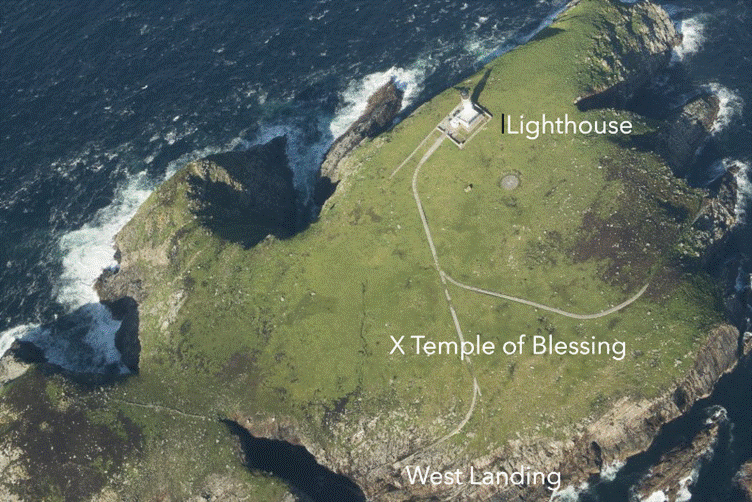
Figure iii. Aerial view of Landmarks upon Eilean Mor (Canmore 2013).
As we can see the consensus is that the lighthouse keepers have fallen or been washed into the sea by a large wave on the west landing. However, once the reports of the disappearances reached newspaper desks, the facts were altered by anonymous reporters, and accounts of a mystery quickly began to spread. Initial newspaper reports of the keepers disappearance would copy Harvey’s telegram almost verbatim. A short account in ‘The Bath Chronicle and Weekly Gazette’ on the 27th of December titled ‘Loss of Lighthouse Staff’ described:
An intimation has been received at the Northern Lighthouse Board, Edinburgh of the loss of light house staff at the Flannan Isles Lighthouse. It is surmised that they were swept away during the storm of last week, either when attempting to save a crane or when trying to render assistance to some vessel in distress (Bath Chronicle 1900).
On the 28th of December, The Scotsman newspaper titled their coverage ‘Disaster at Lewis lighthouse: Three men drowned’ (Scotsman 1900). The newspaper detailed the history and topography of the Flannan Isles and Eilean Mor and included the passage ‘An old Account of the Flannans’ that being Martin Martin’s description (Martin 1700) including all the strange customs. As the main historical account of the Flannan Isles Martin’s inclusion is understandable, but the journalist may have been also alluding to an eerie or supernatural influence. The following day, Saturday the 29th of December, the Dundee based ‘Evening Telegraph reported ‘The Flannan Isles Disaster: Fate of the Missing men: Stornoway Friday’ including the description:
‘No trace of the men or their bodies could be seen that the last entry in the log was dated Saturday morning; and that they seemed to have been at breakfast when something must have occurred which made them leave hurriedly, as a half-finished meal lay on the table.’ (Evening Telegraph 1900).
It seemed as if this Scottish journalist was deliberately attempting to sensationalise his story by including melodramatic language but also outright fabrications. At this point, the only details available was included in Harvey’s telegram (Joseph Moore was still on the island and did not send his letter until the 28th) as such not only is the log entry date flawed but the ‘half-finished meal lay on the table’ (Evening Telegraph 1900) completely fabricated. Clearly the reporter was influenced by the famous maritime mystery of the Mary Celeste where a ships entire crew and passengers disappeared leaving untouched meals on the table. The Glasgow Herald also covered the story on the 29th of December titled ‘THE DISASTER AT THE FLANNAN ISLANDS’ and included the detail ‘Breakfast was set on the living room, and the final entry in the journal was dated Saturday morning last’ (Glasgow Herald,1900) again both erroneous details that could not have been known. To even call the event a disaster is controversial, but the language is deliberately hyperbolic and created to attract readers. A more local taste for the sensational is further represented by ‘The Highland News’ treatment of the disappearance a week later the 5th of January 1901. On the same day both the Shetland Times and the Oban Times included the exact same account in their coverage. The copying or articles or columns was normal practice at this time, as even large newspapers had a skeleton staff and could not provide daily fresh writing so had to use existing reports. The following report was reused freely throughout the United Kingdom.
ANOTHER MYSTERY OF THE DEEP’
[FROM OUR OWN REPORTER]
‘It is now known beyond doubt that the feared disaster at the Flannan Isles did occur, and that the three lighthouse- keepers – Ducat, Marshall and MacArthur-perished. The Northern Lighthouse steamer ‘Pole Star; effected a landing on the island on Wednesday and found the place deserted. The blinds were drawn on the windows. The keepers’ beds were unmade, just as they had risen from them, and their half-finished breakfast was there on the table, with the chairs pushed aside as if they had hurriedly risen and gone out.’
‘On the east side and west sides of the island there are large cranes used for hauling stores up the precipitous cliffs, on top of which the lighthouse is erected. It was discovered that one of these-that on the west side- was carried away by the storm, and as an oilskin was found fixed in the wreckage, it is believed the men were endeavouring to secure the crane, when they were either blown or washed off.
‘The disaster must have occurred on Saturday forenoon, for the last entry in the log is made on the morning that day (Highland News 1901).
‘ANOTHER MYSTERY OF THE DEEP’ (Highland News 1901) was a bold subheading highlighting the anonymous reporters intention to shift the story towards the Mary Celeste type tale. Also, in contrast to the columns details Joseph Moore plainly stated in his letter ‘I entered the rooms in succession and found the beds empty, just as they had left them in the morning’ (Northern Lighthouse Board n.d.). Later a Lieutenant Muirhead of the NLB further confirmed that ‘The pots and pans had been cleaned and the kitchen tidied up, which showed that the man who acted as cook had completed his work’ (Northern Lighthouse Board, n.d.). The inclusion that the crane ‘was carried away by the storm’ and ‘an oilskin was found in the wreckage’ (Highland News 1901) also seems to be tactless gory details completely invented. Interestingly we also had the first mention of ‘the chairs pushed aside as if they had hurriedly risen and gone out’ (Highland News 1901). Neither Moore or Muirhead mentioned a chair moved or not. It seemed as if the reporter had added more mystery to infer that the keepers had to leave in an emergency or in the face of peril. As we will later see this fabrication was seized upon and used by Wilfrid Gibson a decade later in his poem ‘The Flannan Isles (Gibson,1912).
The sensational language used in both newspaper headlines and coverage attracted readers and fed ‘the morbid interest in catastrophe’ that became synonymous with the Victorian, tabloid industry and crime fiction (Ascari 2007:111). There was a further intentional movement towards the sensational reporting favoured by the American Press labelled Yellow Journalism in the early years of the 20th Century. Although the tabloid form and reporting approach was yet to be completely undertaken there was a definite shift in British newspapers approach to reporting at the turn of century, partially to attract working class readers.
On the 8th of January 1901 Superintendent Robert Muirhead after surveying Eilean Mor submitted an official report to the NLB in which he confirmed Moore’s opinion that the keepers had been blown or washed over the cliffs and drowned. He also stated his opinion that:
‘I may state that, as Moore was naturally very much upset by the unfortunate occurrence and appeared very nervous. If this nervousness does not leave Moore, he will require to be transferred, but I am reluctant to recommend this, as I would desire to have one man at least who knows the work of the Station (Northern Lighthouse Board n.d.)
It is also important to highlight some of the details provided as they were seized upon by future writers as mysterious or unexplainable.
• The clocks within the living quarters were described as stopped i.e. the clock stopped on the second of some malign influence. However, as this was the days before universal electricity the clocks had to be wound daily.
• The doors were all closed to infer that a murderer or kidnapper shut the doors behind him but again given the blustery conditions the wind probably blew the doors shut.
• The logbook was completed with daily tasks and meteorological findings up until the 15th, this was because the previous days were detailed on a slate board and had yet to be transcribed to the log which was customary practice. This contributed to much confusion on the apparent day or time of the disaster/accident.
• The remaining pair and boots and jacket were found in the living quarters being that of MacArthur the Occasional Keeper. As Joseph Moore pointed out, MacArthur was not a fully contracted employee and would not have been provided with normal uniform. It does highlight that MacArthur must have been without his overcoat and only in his shirt and slippers when he left the living quarters.
• Finally, Lieutenant Muirhead highlighted in his official report that Moore was noticeably upset. Later writers would explain this as guilt or fear of the supernatural. However, given that Moore was a friend and workmate it is understandable that he was more personally affected by the disappearances.
Figure iv. Copy of the article from The Sphere Magazine (British Newspaper Archive n.d.).
The Sphere magazine covered the disappearances with the title ‘The Disappearance of the Keepers of the Flannan Islands Lighthouse in the Outer Hebrides’ on January 19th, 1901(The Sphere, 1901). It contained a full-page description of the history of the Lighthouse, its geographic location and timeline of the keepers disappearances. There was no mention of the previous newspaper fabrications instead concentrating upon the verified facts and recorded history together with several illustrations. However, as pragmatic as the first part of the article is, the second part is entirely devoted to the more folkloric and eclectic history. There was a picture of the ‘Druidical Stones of Callernish’ (Callanish) (The Sphere, 1901) and Martin Martin’s old account was described in detail. The inclusion of Martin Martin’s account represents the pervading stereotype of the Highlands of Scotland as still being unknown, steeped in mythology and the Highland Celts as overly superstitious. The Sphere’s article was the last contemporary newspaper coverage of the disaster and even at this early date it seemed as if the Flannan Isles mystery had vanished into the Hebridean mist with the consensus being the three keepers having been washed into the ocean.
The newspapers may have been inviting their readers solve the keepers disappearances using the deductive reasoning of the famous fictional detectives of the age. If we remember that Conan Doyle had killed off Sherlock Holmes at the Reichenbach Falls during ‘The Final Problem’ in 1893 (Doyle 2011) to much public dismay and had yet to restore his famous detective (Conan Doyle himself was: a Scotsman, fascinated by the supernatural and devotee of Spiritualism yet he did not ever tackle apparent Flannan Isles mystery). Journalists may have been attempting to fill the cultural void left by Conan Doyle and invite their readers to employ cold hard reason and deduction to solve the mystery for themselves. However, it must be said that an accepted tenet of Detective Fiction was to ignore all supernatural possibilities. It is also surprising that there were no immediate creative responses or Flannan Isles inspired literature as there are a lot of details to attract a writer, especially of the gothic genre that was so popular at the turn of the century. There are Gothic tropes such as omens or curses represented by Martin Martin’s description of the taboo names, customs, and the local’s apprehension upon visiting the Flannan Isles. There is the dilapidated and crumbling ruin of the chapel or Temple of Blessing and the monk whose marauding spirit may still wander the Island and guard his ancient abode. There are ominous climatic conditions in the form of storms, gales and rolling waves thrashing the rocky edges of the Island and howling winds battering the lone sentinel tower. The tower of lighthouse with its spiral staircase is labyrinthian, the light could be construed as a flickering candle in the abyss of the Atlantic Ocean and the sublime is represented by the vast expanse of the Atlantic Ocean and its never-ending horizon. In terms of character, we have the emotional distress in the form of psychological torment of 3 men marooned on an obscure island, cut off from the mainland with no telegram or telephone. Also as previously described the mystery/disaster and the setting of Eilean Mor provided many of the characteristics deemed important to Patrick Geddes withing his rallying call essay ‘The Scots Renascence’ (Geddes 1992). Indeed, the similar Hebridean island of Iona shares many characteristics of Eilean Mor being isolated, home to a monastery and saint and situated on the edges of the North Atlantic. As highlighted by Dr Megan Ferguson: ‘St. Columba and Iona were, for members of the Celtic Renascence and for Geddes, icons and talismans whose influence lasted beyond the short life of the Celtic Renascence’ (Ferguson 2011). Despite all the prerequisite characteristics and the literary environment, it is strange that no early 20th century writers immediately attempted to tackle the mystery.
PART 3: THE LITERATURE
3.1 The Flannan Isles by Wilfrid William Gibson
The last embers of interest in the keepers disappearances had almost extinguished by the end of the first decade of the 20th Century, until the Northumberland poet Wilfrid William Gibson penned the ‘The Flannan Isles’ (Gibson 1912) and threw a literary bucket of petrol on the mystery. First published in the Spectator Magazine in 1911 (Gibson 1911) then later in an anthology of his poetry named Fires in 1912 (Gibson 1912), the poem grabbed the public’s attention and became synonymous with the Flannan Isles for the next century. Often described as macabre, the poem was redolent of Gibson’s ghostly poems in his Fires collection but far removed from later his later works that described ordinary working people and the details of their daily lives. A recognised poet of the Georgian movement, Gibson attracted acclaim with his graphic and emotional descriptions of his experiences during World War One. The poem was a haunting account of the initial discovery of the keepers apparent disappearance, however rather than a first-person point of view the poem was told from the perspective of a group of three replacements who climbed Eilean Mor’s steep stairway to investigate why the Lighthouse light could not be seen. Written in a simple, minimalist style the poem induced a sense of isolation and trepidation upon reaching the solitary Island.
FLANNAN ISLE by Wilfrid William Gibson
Though three men dwell on Flannan Isle
To keep the lamp alight,
As we steered under the lee, we caught
No glimmer through the night.
A passing ship at dawn had brought
The news; and quickly we set sail,
To find out what strange thing might ail
The keepers of the deep-sea light.
The Winter day broke blue and bright,
With glancing sun and glancing spray,
As o’er the swell our boat made way,
As gallant as a gull in flight
But, as we neared the lonely Isle;
And looked up at the naked height;
And saw the lighthouse towering white,
With blinded lantern, that all night
Had never shot a spark
Of comfort through the dark,
So ghostly in the cold sunlight
It seemed, that we were struck the while
With wonder all too dread for words.
And, as into the tiny creek
We stole beneath the hanging crag,
We saw three queer, black, ugly birds—
Too big, by far, in my belief,
For guillemot or shag—
Like seamen sitting bolt-upright
Upon a half-tide reef:
But, as we neared, they plunged from sight,
Without a sound, or spurt of white.
Gibson employed a rhyme and rhythm in the form of a ballad and the opening four-line stanzas used Joseph Moore’s account as inspiration. There are similarities with John Leyden’s ‘Celtic Paradise’ in the descriptions of the tumultuous seas ‘with glancing spray’ and ‘swell’ (Gibson, 1912:43). as they approached the island. The ‘three, Queer, black ugly birds’ (Gibson, 1912:43) were the first of the examples of poetic liberty. As we have read in both Moore’s and Muirhead’s accounts there was no mention of these birds. Gibson may have been inferring to the Albatross and their reputation of ill or good fortune to sailors. This reputation was created through Samuel Coleridge’s epic poem ‘The Rime of the Ancient Mariner’ (Coleridge, 2006) and the curse that was imposed upon a crew when a sailor felled an albatross following their ship. This bird invention would later be attributed to Joseph Moore but never confirmed, legend has it he saw a bird or birds as he approached the Lighthouse. Within the poem the inference was either that the missing keepers were transformed into albatross alike sea birds or carried away by them. Later supernatural sleuths would explain that the keepers being changed into birds was due to the enactment of curse laid down by the monk St Flannan often described as ‘The Phantom of the Seven Hunters.’ It must be remembered that a poet is not an historian but is trying to entertain his readers rather than educate. The poem continued:
And still to mazed to speak,
We landed; and made fast the boat;
And climbed the track in single file,
Each wishing he was safe afloat,
On any sea, however far,
So it be far from Flannan Isle:
And still we seemed to climb, and climb,
As though we’d lost all count of time,
And so must climb for evermore.
Yet, all too soon, we reached the door—
The black, sun-blistered lighthouse-door,
That gaped for us ajar (Gibson 1912:44).
If Gibson had not visited the Eilean Mor, he must have garnered a knowledge of the island in his descriptions of the stairway and steep climb up Eilean Mor’s rock face. The climb was described together with creeping trepidation and an ominous approach to the ‘lighthouse-door, that gaped for us ajar’ (Gibson 1912:44). The door was never mentioned by Moore or Muirhead to have been open, ajar, or otherwise but closed. Also, as the door had only been erected with the new building in the last year it would not have had time to get blistered, especially in the Hebridean climes. However, the details recorded by Moore and Muirhead are not as dramatic as Gibsons.
As, on the threshold, for a spell,
We paused, we seemed to breathe the smell
Of limewash and of tar,
Familiar as our daily breath,
As though ‘t were some strange scent of death:
And so, yet wondering, side by side,
We stood a moment, still tongue-tied:
And each with black foreboding eyed
The door, ere we should fling it wide,
To leave the sunlight for the gloom:
Till, plucking courage up, at last,
Hard on each other’s heels we passed,
Into the living-room.’
(Gibson 1912:44).
Gibson ratcheted up the sense of fear and of possibility of the supernatural by utilising the senses, especially smell in his descriptions ‘Of limewash and tar’ and ‘Some strange scent of death’ (Gibson 1912:44). The visitors seemed almost petrified as they steeled themselves to enter through the wide-open door and pass into the living room:
Yet, as we crowded through the door,
We only saw a table, spread
For dinner, meat and cheese and bread;
But, all untouched; and no one there:
As though, when they sat down to eat,
Ere they could even taste,
Alarm had come; and they in haste
Had risen and left the bread and meat:
For at the table-head a chair
Lay tumbled on the floor.
(Gibson 1912:45).
Now we see the influence of the Highland News article by ‘Our own reporter’ (Highland News, 1901). However, Gibson elaborated further than the ‘half eaten breakfast’ (Highland News, 1901) in describing a ‘table, spread for dinner, meat and cheese and bread’ (Gibson 1912:45) to add more dramatic description (and offer the possibility of rhyme). There is a definite shift towards a sudden event causing all three of the keepers to race from their meals to attend some type of emergency or flee in peril. Similarly, Gibson used the detail of a chair ‘lay tumbled on the floor’ (Gibson, 1912:45).to further dramatize the original fabrication of simply: ‘chairs pushed aside’ (Highland News 1901). This detail was also used to infer either a sign of a struggle, a race to help a compatriot or an escape from imminent danger. He continued:
We found no sign in any place:
And soon again stood face to face
Before the gaping door:
And stole into the room once more
As frightened children steal.
Aye: though we hunted high and low,
And hunted everywhere,
Of the three men’s fate we found no trace
Of any kind in any place,
But a door ajar, and an untouched meal,
And an overtoppled chair.
And, as we listened in the gloom
Of that forsaken living-room—
A chill clutch on our breath—
We thought how ill-chance came to all
Who kept the Flannan Light:
And how the rock had been the death
Of many a likely lad:
How six had come to a sudden end,
And three had gone stark mad:
And one whom we’d all known as friend
Had leapt from the lantern one still night,
And fallen dead by the lighthouse wall:
And long we thought
On the three we sought,
And of what might yet befall.
(Gibson, 1912:45)
There was no such death toll associated with the Flannan Isles. If we remember the Lighthouse had only been erected the year before and the three vanished keepers, Joseph Moore and the injured man he replaced were the only keepers that had manned the Lighthouse since its construction. Six had not come to a sudden end (only three, maybe) and there was no evidence to show that any had gone stark mad, furthermore there was no record of a suicide. Gibson ends his poem with short verses containing four stanzas:
Like curs, a glance has brought to heel,
We listened, flinching there:
And looked, and looked, on the untouched meal,
And the overtoppled chair.
We seemed to stand for an endless while,
Though still no word was said,
Three men alive on Flannan Isle,
Who thought, on three men dead
(Gibson, 1912:45).
The untouched meal and over toppled chair were again repeated to solidify their importance at least in the poets opinion. To finish, the three replacement keepers were left to stand and contemplate the fate of their compatriots and much like the reader are bewildered, hopelessly trying to decipher the mystery. Gibson alluded to a supernatural explanation opting to omit any of details included in Moore’s account or Muirhead’s official report. Also, while John Leyden’s ‘Celtic Paradise’ (Leyden 1875) showed an inspiration towards McPherson’s ‘Poems of Ossian’ (McPherson,1760) Gibson’s poem showed a definite appreciation of Samuel Coleridge in form and spirit. Coleridge was similarly attracted to the mysterious and supernatural as demonstrated in ‘the Rhime of the Ancient Mariner’ and ‘Kubla Khan’ (Coleridge, 2006) but there are also similarities to the rhythms, eight syllable lines and verse structure used within the poem Cristabel. (Hogg, 1989).
The Flannan Isles Mystery is often referred to as the Scottish Marie Celeste Mystery, this was because of the similarities shared in their respective legends if not fact. As noted earlier, the more unprincipled newspapers (especially the local press) were fishing for a maritime mystery and enticing their readership by providing erroneous facts such as the ‘half-finished meal’ left upon the table and the ‘chair pushed aside’ (Highland News, 1901). These invented details were clearly an allusion to the Marie Celeste mystery of 1872 and the often-mistaken belief that the ship was found abandoned with the crew disappeared leaving their uneaten meals upon the table because of some abrupt emergency or crime. The Marie Celeste was named the Mary Celeste and the believed facts of her crews disappearance were erroneous having been created within a short story anonymously 12 years after the real mystery. The author was later identified as a young Arthur Conan Doyle who authored the short story called ‘J. Habakuk Jephson’s Statement’ first published in January 1884 (Doyle 2014). In Conan Doyle’s version of the mystery the crew of the ship was systematically murdered by a former slave who wanted revenge upon the white race for the treatment he received on the cotton fields of America. Such was the popularity of the short story that erroneous spelling of the ship became more common, and Doyle’s invented details preferred to the official facts. So, the two mysteries share similarities in their legend and that the fiction inspired by the original event displaced the original truth. In many respects Gibson’s poem became the Flannan Isles Mystery in public perception and his invented or embellished poetic liberties accepted as fact. His haunting poem later inspired many works of music and fiction in the following century and in many literary enactments or articles at least part of the poem was used as a denouement often together with a drawing or photograph of an over toppled chair. In April 1912, the HMS Titanic ploughed into an iceberg around 3,000 kilometres from the Flannan Isles in the same Atlantic Ocean so as maritime disasters go ‘The Flannan Isles mystery’ was blown out of the water in terms of public interest. In the following decade Europe was overwhelmed by World War One followed by the Great Depression and it was not until the mid-1920’s that writers returned to the Flannan Isles.
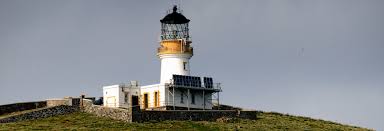
Figure v. Photo of the Flannan Isles Lighthouse (Northern Lighthouse Board n.d.).
3.2 Folklore and Pulp Magazines
The first treatments of the mystery were written in 1925 and their differing approaches would represent two pervading themes that would evolve in the following century. On one hand the imagination and romanticism contained in Folkloric and supernatural approaches, on the other the cold hard reasoning of science and deduction. The first approach was contained in ‘Behold the Hebrides’ by Alasdair Alpin MacGregor (MacGregor,1925), a travel book which combined the journey of author around the Hebrides together with the areas respective folklore and ancient tales. In the chapter ‘A Western Outpost’ MacGregor first described:
Far in Western seas, where the winds and the rains of the Atlantic hold high carnival amid a wildness and an eerie solitude that is broken only by the dashing of the breakers against the base of the great and venerable cliffs. (MacGregor 1925:208).
What followed was a brief history of the Flannan Isles with quotations from Martin Martin to provide a suitably mysterious preface. As a folklorist MacGregor favoured the supernatural and fiction of Gibson’s poem including his description ‘And on the living-room there stood a meal prepared; and on the floor beside it lay an over toppled chair’ (MacGregor 1925:215). Yet in contrast he offered the conclusion that the three keepers were probably washed over the cliffs while trying to secure the crane on the west landing-place rather than any massive bird, monk, or malevolent force. Typically, the author finished the chapter with the quotation ‘Three men alive on Flannan Isle, who thought of three men dead.’ (MacGregor 1925:216). In 1969, Alpin MacGregor returned to the mystery in the first chapter of another travel book called ‘The Furthest Hebrides’ (MacGregor 1969). Despite again using the ‘Three men alive’ quote as a sub heading to his ‘Seven Hunters’ chapter (MacGregor,1969:15) it seemed the author had abandoned much of the imagination and fantasy of his earlier book. The author finished the chapter with:
‘Nearly seventy years have come and gone since that wild December. No one is any nearer a solution. The sea, unlike humans, has a terrifying way of keeping its secrets’ (MacGregor 1969:25).
In the same year, J. G. Lockhart wrote ‘The Tragedy of the Seven Hunters’ (Lockhart 1925) a non-fictional account of the mystery that was published in the Chambers’s Journal. The Chambers Journal was a weekly magazine in the United Kingdom which included longer form topics involving history and science but also short stories, serialisations of fiction and a heavy number of advertisements. Originally published in Edinburgh before moving to London in the 1800s, the Chamber’s Journal could be regarded as a British version of what the American market called Pulp magazines. Named after the cheap paper they were published upon, many respected writers on both sides of the pond wrote for pulps and at the peak of their popularity they provided affordable entertainment for a large readership. Pulp magazines were best known for their shocking and sensational subjects, despite this being a small part of their published material and the Flannan Isles mystery would survive in these publications for the following decades. Lockhart described the Flannan Isles as ‘among the loneliest spots in the world’ which ‘possess both a ruin and tradition’ (Lockhart 1925:505) referencing Alpin MacGregor’s ‘Behold the Hebrides’ (MacGregor 1925) as a source. There was an account of events echoing the details as reported by Joseph Moore and Lt Muirhead but no mention of Gibson’s poem and the erroneous details of the newspaper articles. Martin Martin’s early account is ignored, and any supernatural influence is omitted. As explanation of the keepers disappearances, he posits:
the men, it was assumed, fearing that all was not made fast on the west landing, had attempted to reach it during one of the storms; and they had been blown off the rock by the power of the gale, or swept away by an exceptionally high wave (Lockhart 1925:507).
As further explanation of the mystery the author referenced the extremely specific behaviour of the waves upon Eilean Mor:
Lockhart’s account was a practical explanation of the Flannan Isles Lighthouse mystery. A straightforward explanation lacking any romance, imagination, Gothic traits, or inferences towards supernaturalism. Lockhart also published a collection of maritime tales called ‘Mysteries of the Sea’ in 1924 (Lockhart 1924) however the author omitted the Flannan Isles Mystery completely. One can only surmise that he deemed that the keepers disappearance as unmysterious and did not merit inclusion.
The first work of fiction inspired by the mystery post World War One was the short story ‘On the Isle of the Blue Men by Scots ex-patriot Robert W. Sneddon which was published in an American Pulp magazine called ‘Ghost Stories’ in 1927 (Sneddon 1993). The story could be deemed as Lovecraftian due to the presence of monsters of the deep and the fear of the unknown, but the main spur is folkloric and the afore mentioned Blue Men of the Minch or Storm Kelpies that were legendary mermen like creatures that were said to reside in The Shiant Isles between the West of mainland Scotland and Lewis. The main narrative began with the narrator and his partner holidaying in the Hebrides but becoming lost on a yacht and having to seek harbour on one of the ‘the isles of the Seven Hunters’ (Sneddon 1993). He informed the reader with ‘Now I have heard stories of this island. On it was a ruined church, the Gaelic name of which was translated to me as the ‘Temple of Blessing’ and ‘The name of the island I cannot remember. It was always spoken of as ‘the country’ (Sneddon 1993) so, we know the writer had knowledge of Martin Martin’s early account. The couple were forced to seek refuge from the waves and growing storm on Eilean Mor and were apprehensively invited to stay by the three light house keepers: John Ross, Donald McLeod, and Angus Jamieson. Jamieson was immediately concerned with the presence of a woman on the Island, especially a ‘Red-haired woman!’ (Sneddon 1993) and mentioned a curse and malevolent presences on the Island. As the couple retire to the room the narrator recalled:
All night long as I lay there my flesh tingled, and it seemed to me that the tower of the lighthouse was beset with stealthy prowling horrors to which I could give neither shape nor name (Sneddon 1993).
Sneddon gradually ratcheted up the tension through Jamieson’s continual protestations of the woman’s presence and portents of doom until as they all are sitting around the fire Ross suddenly exclaimed:
‘god spare us all, what’s yon?’
Pressed against the thick glass was a white something, a blob of flesh in which two dead, unwinking, fishy eyes rose above an enormous gaping mouth set with jagged teeth’ (Sneddon 1993).
The blue men then gradually crept up to the lighthouse then attacked the dwellers, the couple were forced to flee for the lives, but were overwhelmed. The keepers were torn to shreds and the woman was dragged away while the narrator collapsed concussed on the yachts deck, only later being found off the coast of Portugal. It is a pity that this short story did not receive the same acclaim and popularity as Gibson’s poem for as fantastical as the tale was, in several ways it was more faithful to the original facts. As a piece of fiction, it was atmospheric, original, and expertly created tension and dread. Sneddon managed to mould the direct English of the narrator the with the Scottish dialect of the keepers and weaved the superstitions and folklore of the Highlands and Lewis into the narrative. Sneddon’s tale did not receive much acclaim but much later was included in a collection of stories called ‘the Lighthouse Horrors’ in 1993 (Waugh 1993).
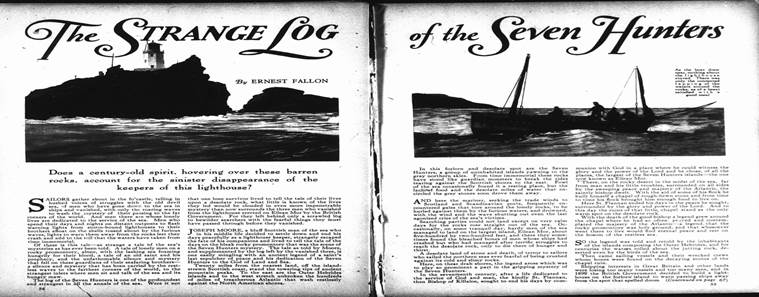
Figure vi. Copy of first page of Ernest Fallon’s ‘The Strange Log of the Seven Hunters’ (Fallon 1929).
‘The Strange Log of the Seven Hunters’ by Ernest Fallon (Fallon,1929) was included in ‘True Strange Stories’ in August 1927 (a short run Pulp magazine published in the United States). Alike Gibson’s poem this short piece provided inaccuracies and inventions in the spirit of entertainment that would have influence for decades, in this case being the details contained within The Strange Log. As the subheading asks: ‘Does a century-old spirit, hovering over these barren rocks, account for the sinister disappearance of the keepers of this lighthouse?’ (Fallon 1929). Describing his article as:
a tale of an old saint and his prophecy’ and ‘a silence and mystery that has been carried by the restless waves to the farthest corners of the world, to the strangest inlets where men sit and talk of the sea and its hungry maw. (Fallon 1929).
This is the first mention or invention of the often-referenced legend of the ‘Phantom of the Seven Hunters.’ There is no written record of this ancient story, nor any folklore to support its belief on Lewis, even the type of avenging spirit tale is not in keeping with early Gaelic or Highland folk or ghost tales and more favoured by gothic tales in later centuries. However, the legend endured and often proposed as supernatural solution to the keepers disappearances. Fallon described Eilean Mor as ‘A desolate land of stone of death’ where mariners ‘sometimes found the bleached bones of men whose ships had crashed’ (Fallon 1929) to add some atmospheric punch to his tale. He used the testament of Joseph Moore and recounted his experiences upon the Island and the many months of laborious work before December 1900. Full conversations with Moore and the captain of the Hesperus are quoted in which they shared their fears and concerns over the tumultuous seas and the loneliness of the Eilean Mor. One might think that Fallon had directly conversed with Joseph Moore such is the detail, but he only posits that ‘Joseph Moore would say in telling his story over a glass of ale in a Scottish pub’ (Fallon 1929). Fallon then details Moore’s discovery of the logbook:
Moore went immediately to the log they kept. Entries were found, in the small, scrawling handwriting that Moore identified as Marshall’s:
Dec. 12 – Gale. North by North-West. Sea lashed to fury. Storm bound.’
The Captain and Moore looked at each other. No storm had been reported that day!
Under that entry, dated “9 P.M.” was another record:
“Never seen such a storm. Waves very high. Tearing at Lighthouse. Everything shipshape. Ducat irritable.”
On the next page was another entry:
“12 P.M. Storm still raging. Wind steady. Storm bound. Cannot go out. Ship passed sounding fog horn. Could see light of cabins. Ducat quiet, McArthur crying.”
McArthur crying! What could this mean! McArthur, strong man of the sea, lusty brawler on land – crying!
Moore could not understand it. Neither could the master of the Hesperus. (Fallon,1929).
As previously noted, any logbook entries were originally written on a chalkboard to be later transcribed to a log and as the most Junior aged member of the crew Marshall would never have been allowed to fill in any log especially not in such personal and unofficial manner. Also as noted from his Telegram, Captain Harvey (Master of the Hesperus) did not even leave his boat and had to leave Moore and a couple of ship mates on the Island. Fallon further described that:
The log continued its amazing record:
“Dec. 13 – Storm continued through night. Wind shifted West by North. Ducat quiet, McArthur praying.”
Then came the last and final entry in the whole puzzling log- an entry that made all those who saw it wonder what its significance might be:
Dec. 15 – 1 P.M. Storm ended. Sea Calm. God is over all.”
That- and nothing more”
Moore refused to stay any longer on the Island rock. He feared the legend of “eternal peace” promised those who stayed on the rock by St Flannan, and he was relieved’ (Fallon,1929).
Thanks to the research of historian Mike Dash and his detailed study ‘The Vanishing Lighthousemen of Eilean Mor’ (Dash 1997) and later article ‘True Strange Storie’ (Dash 2017) it can be deduced that Ernest Fallon was a pseudonym of a known literary hoaxer named Bernarr MacFadden and the Strange Log completely fabricated. However, Fallon’s piece is not without merit as an inventive piece of literature. Although he used much liberty with the facts and the piece was a non-fiction piece, he obviously studied the bare facts of the disappearance then added his own creative flourish. The piece read like an old sailors tale complete with description of Joseph Moore as an old sailor recounting his tale in a Scottish pub. He used the Gothic trope of the found document to add authenticity to his article but by investigating and opinionizing upon his own creation he also distanced himself from the logbook. The reader is fooled into believing the information provided and left as puzzled as the author pretends to be. These logbook details and its creation of the ‘Phantom of the Seven Hunters’ myth together with Gibson’s poetic fabrications would contribute to the pervading elements of the Flannan Isles Mystery as a supernatural tale. The logbook was also later utilised by the popular writer Vincent Gaddis within his paranormal compendium ‘Invisible Horizons- Strange Mysteries of the Sea-True Stories that defy logic…’ (Gaddis 1965). Gaddis was credited with inventing the phrase ‘The Bermuda Triangle’ and became a leading figure in Fortean literature. Gaddis initially describes the disappearances as:‘Weird story of lonely men on a rocky promontory, of three lighthouse keepers who met a strange fate, and the puzzling logbook they left behind’ (Gaddis 1965:177).Alike Ernest Fallon, Gaddis had garnered extra information and quoted further private conversations between the keepers. He cited Joseph Moore’s testimony in front of the NLB as a source, but no such record has ever been found, indeed the NLB deemed that no fatal accident inquiry should take place. Gaddis then quoted the strange logbook details as created by Ernest Fallon cited as ‘who derived his information from English sources’ (Gaddis 1965).
Folklore was further used in Neil Gunn’s ‘Highland Pack’ (Gunn,1949) which was published in 1949 but is a collection of articles written under pseudonym in the Scots Magazine during World War One and in a series of stories entitled ‘Islands and Seas’ also published in the Chamber’s Journal during the 1920’s. Gunn’s collection detailed a journey, but mainly by sea, around the Islands of Western Scotland. Upon reaching The Flannan Isles Gunn questions the skipper if he had ever experienced ‘really dirty weather’ (Gunn 1949:257) to be replied:
Many a time that! And the worse was not so many years ago. On that occasion, a storm beat up while they were in the shelter of the Flannan Rocks. And they lay there for days. Solid walls of sea came in through the narrow canyon between the two islands. ‘The boat all over was a lather of foam bubbles (Gunn 1949:257).
Gunn then made a detailed description of the perilous cliff face and rising and plunging sea waves as crew members struggled to pull sheep on to their boat. Upon Eilean Mor, Gunn and the crew were welcomed by the Head Light Keeper who provided tea and a brief tour of the Island where Gunn was clearly affected by the loneliness of the island. Regarding the mystery Gunn documented a possible version of the events and although he mentioned the ‘evidence of a hastily interrupted breakfast. One chair knocked back’ (Gunn 1949:267) he theorized that:
The men would not know all the ways and currents of the ocean against the rock formations. In fact, subsequent observation proved that in calm weather the sea can pile itself up in a sudden and treacherous manner against the west landing. (Gunn 1949:268-269).
Gunn’s visit to Eilean Mor inspired him to include the island as an important chapter in one of his most famous novels: ‘The Silver Darlings’ (Gunn 1941), a seafaring epic novel set during the Scottish Herring boom of the late 18th and early 19th centuries, so it predated the mystery events in context if not creation. The narrative followed the crew of Highland fishermen that were attempting to escape the harshness of the Highland Clearances via the natural bounty of the surrounding sea. The novel reached the Flannan Islands within chapter 15 named ‘Storm and Precipice’
(Gunn 1941:297) where Gunn drew upon his Highland Pack experiences or as Alistair McCleery explains in his thesis ‘The Sources of the Silver Darlings’: ‘Storm and Precipice; demonstrated Gunn’s transformation of personal experience into highly-wrought fiction; in what follows we see two literary versions of the same story’ (McCleery 1985). Within the chapter the fishermen were forced to dock their boat at the cliffs of Eilean Mor and the main character, Finn had to climb the treacherous cliff face to find fresh water and sustenance for himself and his starving compatriots. Upon reaching the cliff top he filled two bottles from a water spring and entered a stone building (the temple of blessing), pausing to experience the ancientness of the ruin. On his descent he managed to kill some puffins and gather their eggs then scaled back down the treacherous cliff face to save his friends. The only hint of the supernatural is the apparent disbelief of a fisherman in Stornoway when the crew tell him (after realising) that they had just visited the Flannan Isles.
Alike MacGregor and Sneddon, Gunn utilised existing Gaelic or Highland folklore however for Gunn his aims are political using the symbolism of the tough and resilient Celt (McCreery 1985). For Gunn, his young Finn was a 19th century reincarnation of Finn MacCoul heroic leader of the Fianna (Murray 2017:173) and his sea adventures mirrored the epic tales of the Fianna and the heroic characters within James McPherson’s Ossian (McPherson, 1670) adventures. Gunn was a recognised figure within The Scottish Literary Renaissance (a movement that had its genesis in Geddes’ essay ‘The Scottish Renascence’ (Geddes 1992) and a characteristic of this literature was the imbuement of Scotland’s mythological qualities symbolically within the central figures of their novels. The Flannan Isles mystery is not tackled being set centuries before, but Eilean Mor and the treacherous cliffs and surrounding waves served as suitable inspiration to Gunn and provided the opportunity for an important plot device i.e. Finn first demonstrating his capabilities and value to his crew. Folklore was also used as a solution to the mystery by John Michell, an English author and esotericist within his collection of paranormal stories ‘The Flying Saucer Vision’ (Michell 1967). Michell created an inventive and original approach to the mystery but in keeping with the general theme of his book, he managed to point the finger at the supernatural. He referenced the account of Martin Martin and highlighted the eccentric rituals and overplayed the taboo language of the visiting Lewismen however, in Michell’s opinion the answer to the mystery lay at neighbouring Callanish. He believed the Callanish stones were a temple of ritual human sacrifice, and the dead bodies were then ferried to the Flannan Island to be buried. Or as he said: ‘the Flannan Islands were the islands of the dead, the place to which people were ferried and never returned’ (Michell 1967:114).To strengthen his conclusions Michel reasoned that: ‘After all, at the time when it took place sacrifices were still being made on the island and hillsides of Loch Maree and probably in other remote parts of the Highlands.’ (Michell 1967:115). Michell had a poor image of the Highlander if he thought there were human sacrifices being enacted in Scotland in 1900 but he further explained the Flannan Islands were ‘haunted by a little race of supernatural beings’(Michell 1967:115) that being the afore mentioned Pygmies as first detailed by the Dean Munro and Martin Martin. The Pygmies or their fairy like descendants were so offended by the construction of the Lighthouse and murdered the keepers, being seen as an offering in what is ‘seen as an extraordinary repetition of an ancient sacrificial ceremony’ (Michell 1967 :117). This supposition chimes with the ‘Phantom of the Seven Hunters’ myth only the Pygmies are to blame rather than St Flannan. Michell’s theories also lay in the popular the adoption of ‘Celtic’ spiritual practices (which included beliefs such as channelling and ley lines) and the promotion of Celtic folklore within the ‘New Age’ movement of the 1960s (Gibson 2013:4) which in turn were influenced by Celtic mythology promoted during the Celtic Revival at the turn of the 19th century. However, Michell’s beliefs lay in the Celticism of Cornwall rather than Scotland and it seemed as if he simply transferred his esoteric beliefs upon the Eilean Mor, Callanish and the mystery.
3.3 Extraterrestrial and Interdimensional
The first celluloid creation influenced by the mystery came in 1977 via the British science fiction television series Doctor Who. The first episode of the miniseries: Horror of Fang Rock (Russell 1977) was situated on the South Cast of England in the early part of the 20th century. The Doctor and his companion Leela, landed on the Island and investigated the reason for the darkened Lighthouse, joining the three keepers and a group of shipwrecked sailors and passengers. The superstitious old Lighthouse is possessed by a malevolent shapeshifter named Rutan who planned to populate Earth and destroy humankind, then roamed the lighthouse killing the remaining inhabitants. The Doctor and Leela finally defeated Rutan and destroyed his spaceship using the refraction of a diamond through the Lighthouse’s lens. The Doctor referenced Wilfrid Gibson’s poem and recited ‘a door ajar and an overtoppled chair’ as they left the Island in the TARDIS (Russell 1977). For many the actor Tom Baker was the definitive Doctor Who and his characterisation helped contribute to record TV viewing figures. This popularity provided The Flannan Isles Mystery with fresh scrutiny after languishing in the pages of Paranormal paperbacks and Pulp magazines for the past decades. The theme of time and dimensional travel upon the Flannans was also employed by Mike Mignola in his graphic novel Hellboy: Seed of Destruction (Mignola 1993). At the very beginning of the story a group of paranormal investigators tried to locate members of the Nazi Thule society who intended on summoning dark powers from another dimension during the last months of World War Two. They used a medium who sensed a disturbance in the ether proclaiming:
I sense… cold and water. It is a tiny island just off the Scottish coast. Chained in Heaven are they. Seven is their number. Bred in depths of ocean. Neither male or female are they. They are as the howling wind. Which knoweth not mercy, which knoweth not pity. (The text is accompanied by a drawing of the stones of Callanish) (Mignola 1993:9).
The later movie version Hellboy (Del Toro, 2004) is only situated upon an Island off the coast of Scotland. An Army captain complained that ‘There’s Nothing on this Island but sheep and rocks’ (Del Toro, 2004) to which he is corrected:
‘Ruins not rocks, the remains of Trondham Abbey, built on an intersection of ley lines built on the boundaries between our world’ (Del Toro, 2004).
Although just a small mention we can see that the director had a knowledge of the Island and the surrounding mythology, and the inclusion of ley-lines again reflects ‘The New Age’ and ‘Celtic Revival ideas promoted by John Michell. The dimensional travel theme but temporal was also employed within Natasha Pulley’s ‘The Kingdoms’ (Pulley 2021). In an alternative history England (The United Kingdom) lost the Battle of Trafalgar and France then occupied the British Empire. The main character Joe Tournier was a British slave, who lost his memory and the only clue to his previous life was a postcard of Eilean Mor lighthouse built six months previous. In attempting to decipher the puzzle he landed a job as an engineer and gained the opportunity to travel to Eilean Mor in 1900 and repair the faulty Lighthouse (where the keepers have mysteriously disappeared). Upon Eilean Mor he realised that Eilean Mor is a time portal where sailors and combatants can travel back to pre-Trafalgar and change the course of history. The Flannan Mystery is only mentioned briefly, alike within the Dr Who and Hellboy approaches, Eilean Mor is only used as a mysterious setting. However, the inclusion does signify that the Flannan Isles and Eilean Mor had further gathered a mysterious reputation, entered a wider recognition to the public and authors had adapted the mystery to suit more modern themes such as Science Fiction and time travel.
3.4 Modern Interpretations, madness, and the Temple of Blessing.
More modern interpretations of the mystery have concentrated upon psychology of the keepers and the idea that the keepers suffered a type of madness leading to murder and violence. Ernest Fallon was first to characterize McArthur as a ‘lusty brawler’ (Fallon 1929) and volatile which was undeserved, but this reputation influenced some fictious approaches, The first creative to interrogate this psychological theme was the English composer ‘Peter Maxwell Davies’ in his Chamber Opera ‘The Lighthouse’ (Davies 1979). He offered that the keepers suffered a creeping madness after they were haunted by the ghosts of their past guilt and the solitude of the Island. As reviewed by Upa Mesbahian in the Opera Quarterly the opera:
not only profoundly engages the topic of madness, but also tackles it in a unique manner. The Lighthouse interrogates the theme of humans’ collective experiences and explores how the same source might cause the simultaneous derangement of a group of people (Mesbahian, 2021).
The opera opened with three officers testifying in court of enquiry about their journey to the Lighthouse on the Island of Fladda (the name was changed in respect to the real Light House keepers families). Confused and terrified, they provided confused accounts claiming to have heard ‘the creak of the black-backs wings’ (Davies 1979:11) on their approach to the lighthouse. The same three actors then played the disappeared keepers: Sandy, Blazes, and Arthur. Arthur, a bible thumping Christian, taunted Blazes with his religious comments, so to stop an argument and raise their spirits Sandy proposed the singing of songs. Blazes’ song revealed that in his youth he savagely murdered an aged neighbour for which his father hanged. Sandy sang a romantic sea shanty which although appears innocent later reveals sexual indiscretions. Arthur then recited a hymn that described a jealous God’s revenge. Blazes and Sandy became consumed by their guilty memories to the point that they began to see the ghosts of the previously wronged. Obsessed, manic and spurred by the religious hectoring of Arthur the trio convinced themselves an approaching, blinding light was the Antichrist come to attack them. The light is inferred to be that of the relief ship and the three relief officers then replaced the keepers on stage. The relief officers claim: ‘We had to defend ourselves, by God!” (Davies 1979:112), insinuating that they had to overwhelm and kill the crazed keepers who attacked them. They agreed upon a story and cleaned up the crime scene, thus returning to the opening act. It is a difficult story to follow what with only three actors representing all the characters and the complicated structure, however this was Davies intention. By confusing the audience, they empathise with the collective madness of the keepers. Madness is also the theme of the first cinematic treatment of the mystery: ‘The Vanishing’ (Nyholm, 2018) which used the actual three keepers as the main characters. In Nyholm’s version of events the keepers found a shipwrecked man and a wooden box on the shore but while trying to rescue the man attacked Marshall forcing him to crush the man’s skull with a rock. The box was filled with gold and keepers consumed with greed and opportunity. Danish sailors land on the West Landing to recover the gold then attack the keepers, in the ensuing battle the Danes are slain but McArthur also kills a young boy and is overcome with guilt. The Keepers then turn on each and Marshall is killed by the crazed McArthur who then overcome by the further grief convinces Ducat to drown him when they return to the mainland with the gold.
‘Some strange scent of Death’ by English author Angela J. Elliot (Elliot 1993) was the most faithful of all the novels to the accepted events and characters of the events of the 26th of December 1900 although the bulk of the novel described the fictional aftermath. The title used part of a line from Gibson’s poem ‘As though ‘twere some strange scent of death’ (Gibson,1912) and as a preface and Elliot quoted two full verses of Gibsons poem. Elliot used the testimony and circumstances of Joseph Moore as the main thrust of her novel which was counterbalanced with the fictional character of Calum Robinson (Cal), an American Journalist who happens upon the mystery while travelling on the Hesperus then pursues his story with an often callous, journalistic zeal. Elliot quoted the original telegram, Moore’s letter and the article in the Highland News and used these descriptions as the basic structure of the novel together with fictional descriptions and invented conversations. As we know Joseph Moore was the first person to discover that his fellow keepers had disappeared and as Lieutenant Muirhead described in his report to the NLB: ‘I may state that, as Moore was naturally very much upset by the unfortunate occurrence’ (Northern Lighthouse Board n.d.). Angela Elliot utilized Moore’s anxiety however she described the genesis of this being before his reaching the island. When awaiting his relief transport to Eilean Mor, Moore witnessed three apparitions of the keepers at the Uig beach believing this to be portent of doom and the common superstition called ‘forerunners’ that being ‘ghosts of men yet to die at sea’ (Elliot 1993:8). Upon reaching Eilean Mor and discovery of the missing keepers, Moore became increasingly tormented, feeling that the phantom of St Flannan killed his comrades and now haunted him. Overwrought and desperate he retreated to the ancient Temple of Blessing, removed his clothes, and performed a ‘diesal’ turn (Elliot,1993:125) in accordance with the ceremony as described in Martin Martin’s early account then crawled inside. In an effort ‘to make peace with some unearthly and possibly devilish spirit of the isles’ (Elliot 1993:126) he attempted to ‘conjure up the monk’s spirit’ but instead received ‘a sense of wellbeing and tranquillity’ (Elliot 1993:126) and drifted off to sleep. The replacement keepers were concerned with Moore’s deteriorating mental state and tried to assuage his fears, disregarding the ‘Phantom of the Seven Hunters’ tale, instead believing that the keepers may have been kidnapped (Elliot 1993:107). Moore then retreated once more to the Temple of Blessing where a disembodied voice whispered ‘Welcome’ then the one word ‘Sacrifice’ (Elliot 1993:179-182). To Moore the message was clear, he had to make a blood sacrifice to the Island and St Flannan. The temple of Blessing as a plot device was also utilized by the popular Scottish writer Peter May in his crime thriller ‘Coffin Road’ (May 2016). That novel opened with a man washed up on a Harris beach with no memory and the only clue to his identity being a folded map of the Coffin Road (a path worn between Lewis and Harris where bodies or coffins were often interred). Knowing that he had sailed to the Flannan Isles before his accident the man returned to Eilean Mor to find a bludgeoned dead body within the Temple of Blessing. The temple, due to its remoteness was used as a repository for the scientific data that he had gathered regarding the effect of pesticides on Bees (the Hives are situated near the Coffin Road).
4: WAVES AND CONCLUSION
Despite her descriptions of Moore’s perceived haunting and growing psychological torment Angela Elliot eventually provided the most probable solution to the mystery, being a single or multiple rogue waves washing the keepers into the frozen Atlantic Ocean. In her dramatic ending to her novel Moore wandered to the cliff edge, believing that the great wave or’ Skiopageio’ (Elliot 1993:211) would decide his fate alike the missing keepers. Pursued by the reporter, Cal, pestering him with questions, a great wave rose from between the inlet and crashed down upon them both, washing Cal down into the seas and his death. This probable explanation to the Flannan Isles Mystery is reinforced within ‘Stargazing’ by Peter Hill (Hill 2003). This short autobiography was a personal reflection of one man’s service as a Keeper on the Eilean Mor and various Lighthouses around Scotland’s coasts. Hill detailed fellow keepers’ experience when they conducted their daily routines at the West Landing stage. When they climbed the stairway, a large wave rose from the inlet of cliffs and overwhelmed them sending them tumbling down the steep banking. By clinging to each other and the grass they saved themselves from tumbling into the sea (Hill 2003:112). The same phenomenon was recorded by another former Flannan’s keeper named Walter Aldebert during the 1950’s who investigated and witnessed the massive waves that suddenly rose from between the rock inlets and spilled on to the Island (Haswell-Smith, H. (2004). 329–331). These personal impressions and theories regarding the waves were reflected in the majority the Flannans related literature. In general, every written description either fiction or non-fiction described the tumultuous Hebridean seas and Atlantic Ocean crashing against the Flannan Rocks, of giant waves lashing the island’s edges and the inherent danger in working and living on Eilean Mor. From the early accounts of Martin Martin and his description of the superstitious boatmen braving a perilous crossing to the Islands, or Leyden’s poem ‘Celtic Paradise’ description of ‘Whose heaving wastes and weltering waves enclose’ (Leyden 1875) up until the modern interpretations and former keepers testimonies the surrounding ocean was always described with terrifying detail. Early newspaper articles described the destruction of the crane on the West landing after overpowered by massive waves. Within Wilfrid William Gibson’s ‘Flannan Isle’ the poet wrote: ‘With glancing sun and glancing spray/As o’er the swell our boat made way/As gallant as a gull in flight’ (Gibson 1912: 48). Neil Gunn wrote dramatic description of the crew trying to land sheep within Highland Pack (Gunn,1949: 267) which he converted into Finn struggling to land on Eilean Mor and climb the treacherous rock cliffs within the chapter Storm and Precipice (Gunn 1941:297). J.G Lockhart posited that:
It was found that off the west landing, in quite calm weather, the sea would suddenly and unexpectedly rise to a very high level… At one moment the waves will be washing idly round the base of the rocks; at the next they will surge forward and upward; and, if there is anyone standing within their range at the moment, they will catch him and drag him back and drown him’ (Lockhart 1925).
Sneddon’s couple had to seek refuge on Eilean Mor during a storm and were unable to set back to the mainland until the seas calm (Sneddon 1993).The crew were shipwrecked on the Island during the Dr Who series (Russell 1977), as was the man who was found on the rocks during ‘The Vanishing’ (Nyholm 2018) and Peter May’s main character in Coffin Road (May 2018). Invertedly in trying to fool his readers Ernest Fallon described Eilean Mor as ‘A desolate land of stone and death’ (Fallon 1929) where mariners ‘sometimes found the bleached bones of men whose ships had crashed’ (Fallon 1929) which gave unintended credence to the solution that sea was to blame for the disappearances. For authors that had visited or worked on Eilean Mor i.e. Neil Gunn, Peter Hill, and Walter Aldebert the waves are a dominant characteristic of the Island where visitors were at the mercy of the sea. For others, the solution lay in the stars, the temple of blessing and the folk tales of the Hebrides but for those who took step on the Island the solution was clear and all around them. Even today Eilean Mor is only visitable by Helicopter and only when conditions are fair.
If I were to offer a solution to the mystery, Ducat and Marshall were completing their duties on the West Landing Ducat and Ducat fell or tripped on the steep stairway breaking an ankle or bone in the process. Marshall ran back to get help from McArthur who was in kitchen completing his duties, who then raced out without jacket and boots to help his comrade. While McArthur and Marshall were helping Ducat up the stairway a large wave crashed upon them and washed them all into sea. Their heavy, winter clothing, the temperature of water, and the heavy swells crashing them against rocks and cliffs was overwhelming and all three were dragged into the depths and wide expanse of the Atlantic Ocean never to found again.
The Flannan Isles mystery started as an industrial accident, was exploited by journalists, elaborated by a poet then expounded upon by a host of writers and creatives. In this process the mystery has become legend and if Scottish mythology is the gathering of myths that have emerged through the country’s history, often being elaborated upon, romanticised and moulded into modern contexts by successive generations then the Flannan Isles mystery should reside with the timeless Scottish legends such as the Blue Men of the Minch and the Monster of Loch Ness and not merely with maritime mysteries such as the Marie Celeste and the Bermuda Triangle. If the purpose of legends is to preserve cultural traditions, teach moral lessons and animate critical thinking then the Flannan Isles Mystery neatly fills all the prerequisites and deserves a wider recognition as a Scottish legend. However, in this age of disinformation or fake news it is more imperative than ever to not simply accept the tall tales and suppositions of creatives as fact even in the spirit of entertainment. One should never forget that three men lost their lives while bravely completing their roles in the most dangerous of settings and circumstances and while ‘The mystery of the Flannan Isles’ preserves their historical legacy their sacrifice and loss to their families should never be forgotten.
BIBLIOGRAPHY/REFERENCES
Newspapers accessed through The British Newspaper Archive.
The Bath Chronicle and Weekly Gazette. (1900), ‘Loss of Lighthouse Staff’, December 27 1900, [Online] Available: <https://www.britishnewspaperarchive.co.uk/viewer/BL/0000221/19001227/061/0005?browse=False> [Last accessed: 24/07/2024].
Evening Telegraph, (1900), ‘The Flannan Isles Disaster: Fate of the Missing men: Stornoway Friday’, 29 December 1900, [Online] Available: <https://www.britishnewspaperarchive.co.uk/viewer/BL/0000453/19001229/013/0004?browse=False%5BLast accessed: 24/07/2024].
Highland News. (1901) ‘THE FLANNAN ISLANDS DISASTER. ANOTHER MYSTERY OF THE DEEP’, 05 January 1901, [Online] Available: <https://www.britishnewspaperarchive.co.uk/viewer/BL/0002661/19010105/040/0002?browse=False%5BLast accessed: 24/07/2024].
The Glasgow Herald. (1900), titled ‘THE DISASTER AT THE FLANNAN ISLANDS’, 29 December 1900, [Online] Available: <https://www.britishnewspaperarchive.co.uk/viewer/BL/0000060/19001229/016/0005?browse=False%5BLast accessed: 24/07/2024].
The Scotsman. (1900), ‘Disaster at Lewis lighthouse: Three men drowned’, December 28 1900, [Online] Available: <https://www.britishnewspaperarchive.co.uk/viewer/BL/0000540/19001228/104/0005?browse=False> [Last accessed: 24/07/2024].
The Sphere. (1901) ‘The Disappearance of the Keepers of the Flannan Islands Lighthouse in the Outer Hebrides’, January 19 January 1901, [Online] Available: < https://www.britishnewspaperarchive.co.uk/viewer/BL/0001861/19010119/018/0016?browse=False> [Last accessed: 24/07/2024].
LIST OF IMAGES
Figure i. (2024) Map of Scotland, National Geographic, [Online], [Last accessed: 24/07/2024].
Figure ii. (2020) Picture of Thomas Marshall, Donald McArthur, James Ducat, and Lieutenant Muirhead, Press and Journal [online]. Available from < https://www.pressandjournal.co.uk/fp/past-times/2764534/vanishing-men-the-mystery-of-the-flannan-isles-lighthouse-keepers/> [Last accessed: 24/07/2024].
Figure iii. (2013) Aerial view of Landmarks upon Eilean Mor, Canmore, [Online] Available: < https://canmore.org.uk/site/171215/flannan-isles-eilean-mor-lighthouse/> [Last accessed: 24/07/2024].
Figure iv (1901) The Sphere.The Sphere Magazine Image © Illustrated London News Group. Image created courtesy of THE BRITISH LIBRARY BOARD, [Online] Available: <https://www.britishnewspaperarchive.co.uk/viewer/BL/0001861/19010119/018/0016?browse=False> [Last accessed: 24/07/2024].
Figure v (n.d). Image of the Eilean Mor Lighthouse, Northern Lighthouse Board, [Online] Available: <https://www.nlb.org.uk/history/flannan-isles/> [Last accessed: 24/07/2024].
Figure vi (1929) Image of first page of ‘The Strange Log of the Seven Hunters’. Image and text obtained by microfilm at the American Library of Congress
LITERATURE
Ascari, M. (2007), A Counter-History of Crime Fiction, Palgrave MacMillan, England.
Arnold,M, On the study of Celtic literature and other essays (1822-1888) J.M. Dent & sons ; London
Bateman, M, The Landscape of the Gaelic Imagination (2009), International Journal of Heritage Studies Vol 15: 2-3 142-152, Routledge, Taylor and Francis Group, London
Campbell, J.G.(2019), Superstitions of the highlands and islands of Scotland, Aplha Editions, United Kingdom.
Conan, A,C. (2011) The Memoirs of Sherlock Holmes Paperback, Penguin, London
Doyle, A,C. (2014), J. Habakuk Jephson’s Statement, Rise of Douai, England.
Coleridge, S. (2006) The Rime of the Ancient Mariner, The Project Gutenberg EBook of The Rime of the Ancient Mariner, Gutenberg [Online]: Available:<https://www.gutenberg.org/files/151/151-h/151-h.htm>> [Last accessed 25/06/2024].
Coleridge.S. (2006) Works of Samuel Coleridge, The Project Gutenberg EBook, Gutenberg [Online], Available: < https://www.gutenberg.org/files/59226/59226-h/59226-h.htm>> [Last accessed 25/06/2024].
Dash,M. (1997) The Vanishing Lighthouse men of Eilean Mhor, Fortean Times, London[Online]: Available:< https://www.mikedash.com/_files/ugd/7bb090_3f4c6a6113bc436ab084c83b7d098f1e.pdf>> [Last Accessed: 24/07/24].
Dash, M, (2017): Fake News and Macfadden/True Strange Stories, Fortean Times, London, [Online] <https://www.academia.edu/34329912/Fake_news_and_Macfadden_pdf > [Last accessed: 24/07/2024].
Davies, P M, The Lighthouse (vocal score), Chester Music, London.
Ferguson, M, (2011) Patrick Geddes and the Celtic Renascence of the 1890s, Student thesis: Doctoral Thesis › Doctor of Philosophy, University of Dundee. [Online] Available: <https://discovery.dundee.ac.uk/en/studentTheses/patrick-geddes-and-the-celtic-renascence-of-the-1890s> [Last accessed: 24/07/2024].
Elliot, A. (2005), Some Strange Scent of Death, Whittles, Publishing, Scotland.
Gaddis,V. (1965), Invisible Horizons: Strange Mysteries of the Sea-True Stories that defy logic…,Ace Books, New York.
Grant, A, (n.d.), Gaelic Place-Names: ‘Uamh’(n.d), The Bottle Imp, Association for Scottish Literary Studies, Edinburgh [Online] <https://www.thebottleimp.org.uk/2014/11/gaelic-place-names-uamh/> [Last accessed: 24/07/2024].
Gibson, W,W. (1911), Flannan Isles. The Spectator Magazine, London [online], p18. Available: <https://archive.spectator.co.uk/article/17th-june-1911/18/poetry >> [Last Accessed: 24/07/24].
Gibson, M.,Trower, S., Tregida,G., (Editors)(2013), Mysticism. Myth and Celtic Identity, Routledge, New York.
Gibson, W.W, (1912), Flannan Isles from Fires Books 1-111: The Stone and Other Tales, Leopold Classic Library, London.
Gunn,N. (1941),The Silver Darlings, Faber and Faber Ltd, London.
Gunn, N. (1949), Highland Pack, Faber and Faber Ltd, London.
Hill,P.(2003),Stargazing, Canongate Books, Edinburgh.
Hogg, R. (1982), Wilfrid William Gibson: People’s poet; a critical and biographical study of W.W. Gibson 1872- 1962 Newcastle University, England. [Online] Available: <http://theses.ncl.ac.uk/jspui/handle/10443/179813 > [Last accessed: 24/07/2024].
Johnson, S. (2002), A Journey to the Western Isles of Scotland Everyman’s Library, London.
Leyden, J, (1875), The Poetical Works of Dr. John Leyden, William P, Nimmo, Edinburgh. Reproduced by ULAN press. Lockhart, J.G. (1924), Mysteries of the Sea, The Nautilus Library, London.
Lockhart, J.G. (1925), The Tragedy of the Seven Hunters, Chamber’s Journal, W&R Chambers Ltd, London.
MacPherson, J. (1760). The Poems Of Ossian, Translated By James Macpherson: Republished by Creative Media Partners, LLC. Publisher : Legare Street Press (2023).
Martin, M. (2018), Description of the Western Isles of Scotland, Birlinn Ltd, Edinburgh
May,P. Coffin Road,(2016). Quertus Editions, London.
McCloskey, K. (2014), The Lighthouse, The History Press, England.
McCleery, A.(1985), The Sources of the Silver Darlings, Studies in Scottish Literature: Vol 20: Iss. 1.[Online] Available: https:scholarcommons.sc.edu/ssl/vol20/iss1/13 > [Last accessed: 24/07/2024].
Michell, J. (1967), The Flying Saucer Vision, Sidgwick and Jackson Ltd, Great Britain.
Monro, D. (1884), Description of the Western Isles of Scotland, Thomas D Morrison, Glasgow, reprinted by Leopold Classic Library, London.
Lockhart, J.G, The Tragedy of the Seven Hunters (1925), The Chambers Journal, London
Lockhart, J,G, Mysteries of the Sea (1924), The Nautilus Library, London
MacGregor, A,A. (1925), Behold the Hebrides W.&R, Chambers, Limited, Edinburgh
MacGregor, A,A, The Furthest Hebrides (1969), Michael Joesph Ltd, London
Mardon E, Mardon A, (n.d.) A translation of ‘A Description of the Western Isles of Scotland (1549)’ by Ernest Mardon and Austin Mardon, Golden Meteorite Press, Canada.
Mesbahian,U. (2020) The Lighthouse: A Tale of Collective Madness, The Opera Quarterly, Volume 36, Issue 3-4, Summer-Autumn, P152–189, London.
Mignola,M.(1993), Hellboy: Seed of Destruction, Dark Horse Books, United States.
Murray,J. (2017), A Gaelic Landscape: Song, Poem and Tale, Whittle Publishing, Caithness, Scotland.
Northern Lighthouse Board (n.d.), Telegram from master of the Hesperus: Letter from Joseph Moore: Report Submitted by Robert Muirhead, The Northern Lighthouse Board[Online] Available: <https://www.nlb.org.uk/history/flannan-isles/> [Last accessed: 24/07/2024].
Nyholm, C. (2018), The Vanishing, Blu-ray, Lionsgate, United States.
Pully,N. (2021), The Kingdoms, Bloomsbury Publishing, London.
Rackwitz,M. (2007), Travels to Terra Incognita: The Scottish Highlands and Hebrides in early modern travellers accounts c.1600-1800, Waxman, Germany.
Robson, M, The Flannan Isles, Island Notes, Isle of Lewis, Scotland.
Russell, P. (1977), Horror of Fang Rock: Season 15, DVD, British Broadcasting Corporation, London.
Sneddon, R W. (1993), On the Isle of Blue Men: Lighthouse Horrors’, Down East Books, Maine, USA.
Smith, H.H. (1996), The Scottish Islands, Canongate, Edinburgh.

